
Furniture Disposal: A Complete Guide for Homeowners
Nobody plans a weekend around getting rid of a couch. But at some point, every homeowner stares at a piece of furniture and thinks: this has to go.
Maybe it’s the recliner that’s been sagging for two years. A mattress that survived three moves and shouldn’t have survived the first one. A dining table your kids outgrew a decade ago. Whatever it is, you already know you want it gone. The question is how to make that happen without overpaying, breaking your back, or dumping it somewhere you shouldn’t.
That’s where most people get stuck. Not because furniture disposal is complicated, but because nobody ever explains the actual options clearly. This guide is here to fix that.
No jargon. No fluff. Just the real options, real costs, and real trade-offs for getting rid of furniture in the United States—whether it’s one couch or an entire house full of stuff.
The Right Question to Ask First
Most homeowners start with “Can I throw this away?” That’s the wrong question.
In the U.S., furniture almost never belongs in your regular curbside trash. It’s classified as bulky waste, which means it needs a separate pickup, a drop-off at a transfer station, a donation pickup, or a professional removal service. Your normal trash hauler won’t take it—and if you leave it on the curb hoping someone does, you’re likely violating a local ordinance.
The better question is:
What’s the best route for this specific item, in this condition, in my city?
Get those five answers right, and the rest of the process practically decides itself.
Condition Matters More Than Type
Before you think about where to take something, look at what you actually have. Condition is the single biggest filter for every decision that follows. A solid oak dresser in great shape opens completely different doors than a particle-board bookshelf with a broken back panel.
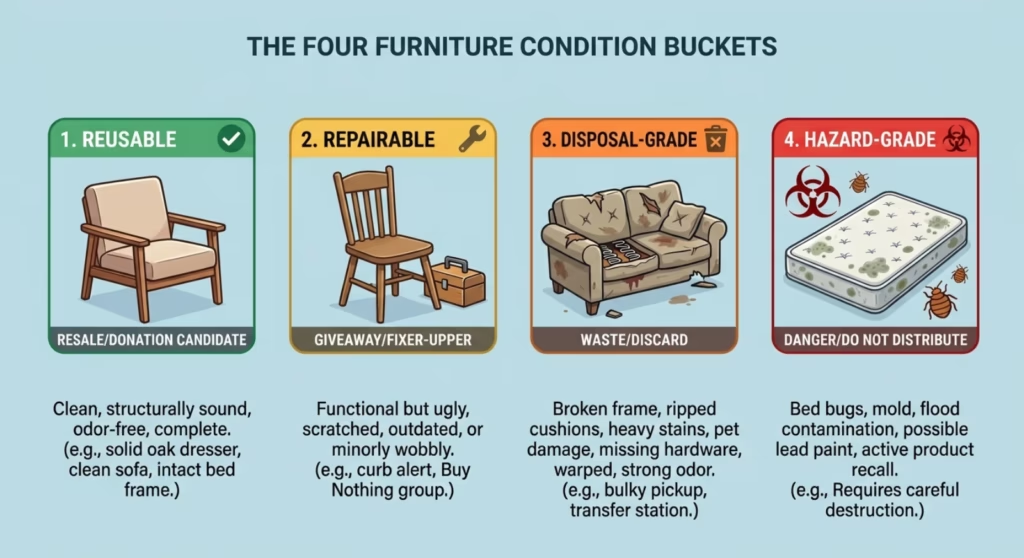
The Four Condition Buckets
01 Reusable
The item is structurally sound, clean, odor-free, and complete. This is your donation, resale, or giveaway candidate. Think solid wood tables, clean sofas, intact bed frames, dressers that still close properly.
02 Repairable
Maybe it’s functional but ugly—scratched, outdated, or minorly wobbly. This can still work for giveaway platforms, Facebook Marketplace, Buy Nothing groups, or a curb alert where that’s legal.
03 Disposal-grade
Broken frame, ripped cushions, deep stains, pet damage, heavy wear, missing hardware, warped particle board, or strong odor. Most charities will refuse it. Most people won’t want it for free. This is headed for bulky pickup, a transfer station, or a junk removal truck.
04 Hazard-grade
Bed bugs, mold, flood contamination, possible lead paint on old children’s furniture, or an active product recall. These items require extra caution. They often need to be destroyed rather than passed on.
Be honest with yourself during this step. Overestimating the condition wastes time—yours and the charity’s. Underestimating it means missing a chance to donate or sell something that still has life in it.
Your Disposal Options, Ranked
| City | Model | Cost to Resident | Key Rules |
| New York City | Free Curbside | $0 (tax-funded) | Up to 6 items per collection day |
| Chicago | Free Curbside | $0 (annual fee) | No item limit; regular routes |
| Phoenix | Appointment | $0 (4x per year) | 10 cubic yard limit; 3-day advance scheduling |
| Seattle | Pay-Per-Item | $30–$38 per item | Curbside only; no indoor pickup |
| Miami-Dade | Annual Allocation | $0 (annual fee) | 2 pickups per year, 25 cubic yards each |
Expect to pay based on weight or volume. National average tipping fees are running around $62 per ton and rising, with the Northeast and West Coast significantly higher. Call ahead to confirm what they accept and what it costs.
What You Need to Know by Furniture Type
Sofas, Couches, and Upholstered Chairs
These are among the hardest items to recycle because they’re made of mixed materials: wood, metal, foam, fabric, leather, padding, springs, and plastics. That combination makes disassembly labor-intensive and recycling infrastructure limited.
For homeowners, this means donation is great if the piece is clean and presentable, but recycling is much harder than most people assume. The realistic path for a worn-out couch is usually bulky pickup, junk removal, or a transfer station drop-off.
Mattresses and Box Springs
Mattresses are their own category. Many charities refuse used mattresses, and many cities treat them differently from other furniture.
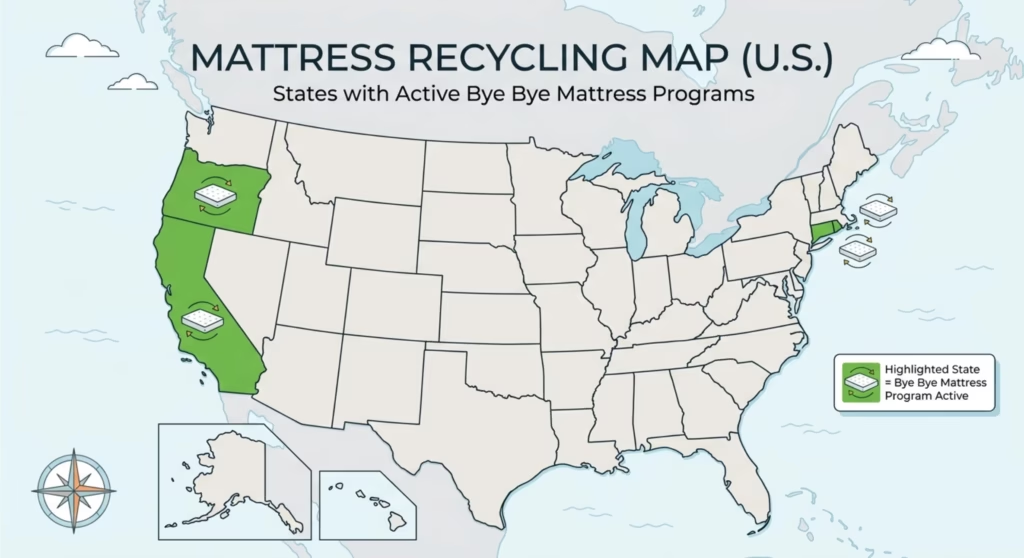
Four states currently operate mattress recycling programs through the Bye Bye Mattress initiative: California, Connecticut, Oregon, and Rhode Island. If you’re in one of those states, you’ve already paid a recycling fee at purchase and have access to dedicated drop-off points and retailer take-back options.
Dressers, Tables, Desks, and Bookshelves
Solid wood pieces in good shape are the easiest furniture to donate or sell. They hold their value better than particle board, they photograph well for online listings, and charities actively want them.
But there’s a safety caveat for dressers and children’s storage furniture: check for recalls. Tip-over hazards remain an active safety concern, and CPSC continues to issue recalls for these products. If you’re selling or donating a dresser, verify it hasn’t been recalled before passing it along.
Cribs, Bunk Beds, and Nursery Furniture
This is the category where you should be extra conservative. Cribs, bunk beds, and children’s furniture have federal safety standards and a long history of recalls. If you’re not absolutely sure a piece is compliant and safe, do not donate or resell it. The risk isn’t worth the convenience.
When You Should Not Donate or Sell
Bed Bugs
If furniture has been exposed to bed bugs, it does not get donated, sold, or left on the curb looking “free.” Mark it clearly — write “Bed Bugs” on it — so nobody picks it up accidentally.
An unmarked infested couch on the curb can spread an infestation to an entire building.
Mold or Flood Contamination
Upholstered furniture that’s been soaked in a flood or exposed to significant mold growth should be discarded. Porous materials absorb moisture deep into their structure, and mold can grow in spaces you can’t reach or clean. The CDC is clear on this: if it’s porous and it’s been waterlogged, throw it away.
The couch looks fine once it dries. But inside the cushions, inside the frame padding, the mold is already growing.
Recalled Products
It’s illegal to sell or distribute recalled products — used furniture included. Check the CPSC recalls database before donating or selling dressers, cribs, bunk beds, and any children’s furniture.
Old Painted Children’s Furniture
Furniture manufactured before 1978 may contain lead-based paint. Look for: cracking pattern resembling alligator skin, chalky white residue, thick layers of old paint. If you suspect lead, don’t sand it, don’t scrape it, and don’t pass it along. Test with a lead swab kit or dispose through your city’s hazardous waste program.
What “Recycling Furniture” Really Means
Many homeowners assume furniture can be tossed in a recycling bin or dropped at a recycling center. In reality, whole-furniture recycling is limited because most pieces are mixed-material and labor-intensive to take apart.
In practice, furniture “recycling” usually means:
✓ Metal recovery from bed frames, springs, filing cabinets, or steel furniture
✓ Wood recovery from untreated solid wood
✓ Component separation if a facility accepts dismantled parts
✓ Mattress recycling through a specialized program
✓ Reuse and refurbishment — often the most realistic recycling-like outcome
If you want the most sustainable result, the order is: reuse, then donation, then specialty recycling, then disposal. “Recycling” as most people imagine it—dropping a whole sofa at a center and walking away—doesn’t exist for furniture in most of the country.
Retailer Take-Back Programs
A growing number of furniture retailers will haul away your old piece when delivering a new one. This is worth knowing about if you’re already buying a replacement.
| Retailer | Removes Old Item? | Cost | Restrictions |
| IKEA | Yes | ~$30 | One-for-one; with in-store purchases |
| Pottery Barn | Yes | Included in White Glove | Premium delivery only |
| Raymour & Flanigan | Limited | Varies | Usually mattresses and sleep sets |
| Rooms To Go | Yes | Included | Often focuses on mattress sets |
| Ashley Furniture | No | — | Removal not generally offered |
IKEA Buyback & Resell: For IKEA Family members, offering store credit for eligible furniture returns. Limited scope, but a smart way to offset new purchase costs.
The Tax Deduction Angle
If you donate furniture to a qualified charity, you may be able to claim a federal charitable deduction—but only if you itemize and follow IRS rules.
The furniture must be in good used condition or better. The deduction is based on fair market value at the time of donation, not what you originally paid. For most used furniture, that value is significantly lower than people expect.
| Furniture Item | Low Estimate (Good) | High Estimate (Like New) |
| Sofa / Couch | $36 | $207 – $395 |
| Dresser / Chest | $20 | $104 |
| Dining Set (Complete) | $156 | $934 |
| Coffee Table | $15 | $100 |
| Bedroom Set (Complete) | $259 | $1,037 |
What It Actually Costs
Here’s the practical cost hierarchy, from lowest to highest for most homeowners.
The cost drivers are predictable. More stuff costs more. Heavier stuff costs more. Second floor costs more. Contaminated items cost more. Knowing this in advance keeps you from being surprised by the quote.
The Most Common Homeowner Mistakes
01 Treating Donation Centers Like Dumps
If the furniture is dirty, broken, unsafe, stained, or incomplete, most charities will reject it. Driving a sagging couch across town only to have it refused is a waste of everyone’s time and resources.
02 Assuming “Someone Will Want It”
That’s especially risky with bed-bug-exposed upholstery, recalled children’s furniture, flood-damaged pieces, and heavily worn couches. Just because it’s free doesn’t mean it’s safe. And just because you list it doesn’t mean someone should take it.
03 Forgetting Recall and Safety Checks
A dresser, crib, or bunk bed may look perfectly fine and still be unsafe. The CPSC maintains an active recalls database. A two-minute search can prevent you from passing a hazard to another family.
04 Waiting Until Moving Day
Furniture disposal takes longer than people expect. Donation pickups need scheduling. City pickups run on their own calendar. Transfer stations have hours and limits. Start the process at least two weeks before you need the space clear.
05 Illegal Dumping
Leaving furniture in an alley, a vacant lot, or a dumpster that isn’t yours is illegal. It harms public health, damages property values, attracts pests, and can result in fines. There’s no scenario where this is the right call.
Quick-Reference Decision Guide
Your Furniture Disposal Checklist
Before you dispose of any furniture, walk through these steps.
Inspect the piece honestly
Check for stains, odors, tears, pet damage, mold, pests, missing parts, structural damage, and recall history for children’s or storage furniture.
Decide which bucket it belongs in
Reusable. Donation-grade. Disposal-grade. Hazard-grade.
Check local bulky-item rules
This is the step most people skip, and it’s the one that matters most. Every city is different.
If donating, check the charity first
Habitat ReStore, Goodwill, and Salvation Army rules vary by location and by item. Call ahead. Don’t assume.
If selling or giving away, check safety first
Especially for cribs, bunk beds, dressers, and anything that might be recalled.
If contaminated, label and isolate
That’s especially important for bed bugs and flood damage. Mark it. Contain it. Arrange prompt disposal.
FAQs About Hoarding Cleanup
Can I put furniture in my regular trash?
Almost never. Furniture is classified as bulky waste in most U.S. cities and requires separate handling—whether that’s a scheduled bulk pickup, a transfer station drop-off, or a junk removal service.
How much does it cost to have furniture removed?
Single items typically run $75 to $200. A typical homeowner load—a few pieces of furniture—usually lands between $150 and $350. Costs depend on volume, weight, location, and access difficulty.
Will Goodwill or Salvation Army pick up my old couch?
They may, if it’s in good, clean, functional condition. Rules vary by location. Call your local chapter first and be honest about the item’s condition. If it’s stained, torn, or heavily worn, expect a polite no.
Can I recycle a sofa?
Whole-sofa recycling is extremely limited because couches are made of mixed materials. You can disassemble one yourself—separating metal, wood, and foam—but there’s no simple drop-off option in most areas.
What do I do with a mattress?
Check whether your state has a recycling program (California, Connecticut, Oregon, and Rhode Island do). Otherwise, check local bulky-item rules, look for specialty recyclers, and don’t assume charities will accept it.
Is there a tax deduction for donating furniture?
Potentially, if you itemize deductions and the furniture is in good used condition or better. The deduction is based on fair market value, which is usually much lower than what you paid. Keep receipts and don’t inflate values.
What should I do with furniture that has bed bugs?
Do not donate, sell, or leave it on the curb unlabeled. Mark it clearly with “Bed Bugs,” contain the area, and arrange prompt disposal. Spreading an infestation is one of the worst outcomes of careless furniture disposal.
How far in advance should I plan furniture disposal?
At least two weeks before you need the space clear. Donation pickups, city bulk pickups, and even junk removal bookings can take time to schedule, especially during busy seasons.