
Junk Removal Leads: What Every Channel Actually Costs in 2026
By Jim Stogiannos · September 13, 2026
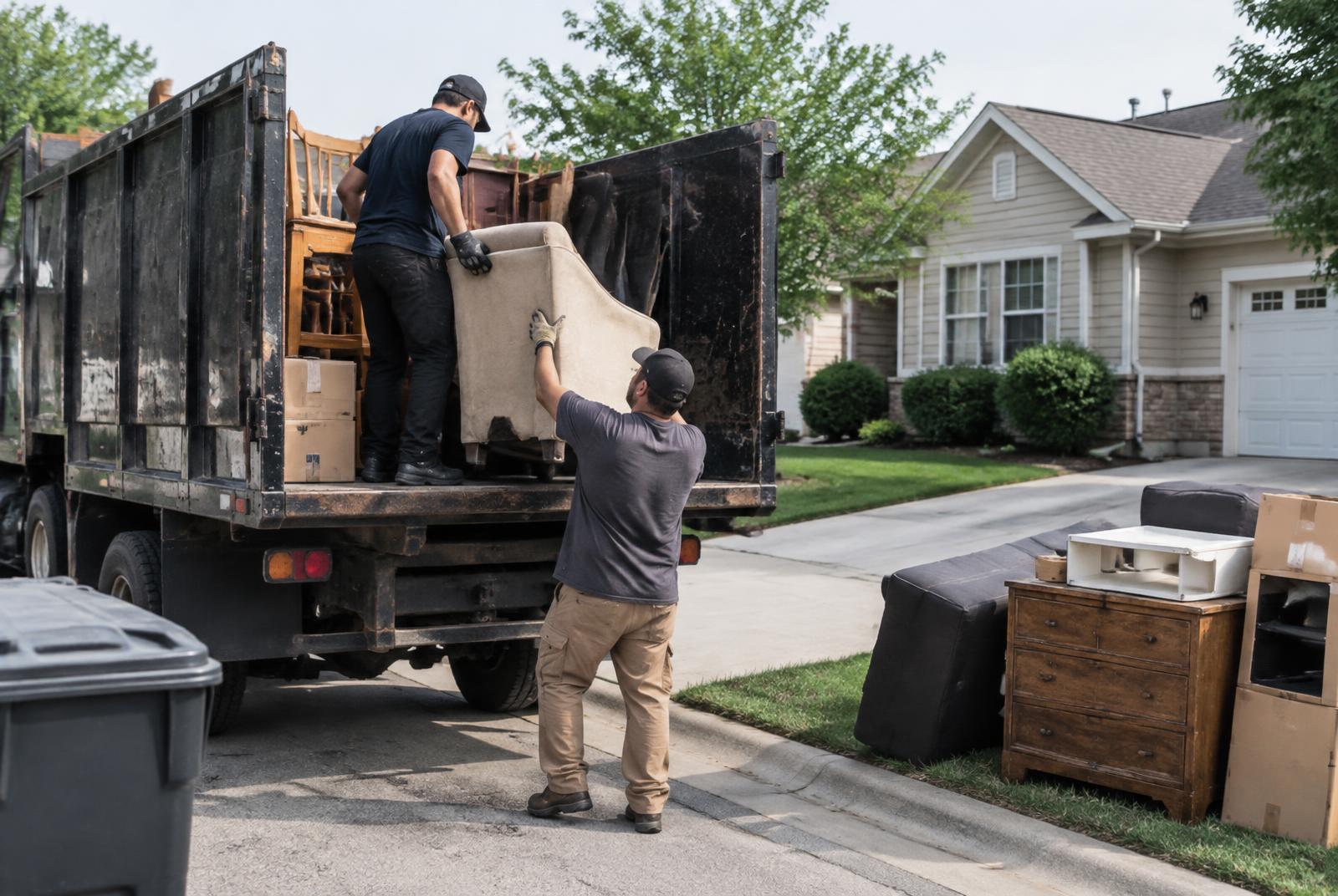
Every junk removal owner has had the same week. You spend $600 on leads, take nineteen calls, and book four jobs. Two of them were price shoppers who ghosted after the quote. One was a single mattress across town.
The problem usually isn’t the number of leads. It’s that cost per lead is the wrong number to run your business on, and almost every platform selling you leads knows it.
Here’s what each channel actually costs once you account for how many of those leads turn into paid work.
The only number that matters: cost per booked job
A lead is not a job. A $20 lead that closes 12% of the time costs you $167 per booked job. A $55 lead that closes 65% costs you $85.
The cheap lead is twice as expensive.
Run this on every channel you use:
Cost per booked job = cost per lead ÷ close rate
That’s the number to compare. Not the one on the invoice.
What each channel costs
Industry benchmarks for junk removal, 2026:
| Channel | Cost per lead | Close rate | Cost per booked job |
|---|---|---|---|
| Referral partnerships | $0–50 | 70–80% | $0–65 |
| Organic SEO / directories | $5–15 | 40–60% | $10–35 |
| Vehicle wraps | $2–8 | varies | low, slow |
| Google Local Services Ads | $30–65 | 60–70% | $45–110 |
| Google Ads (PPC) | $35–50 | 30–50% | $70–165 |
| Thumbtack | $10–50 | 15–25% | $50–330 |
| Angi / HomeAdvisor | $15–100 (+$350/yr) | 10–20% | $95–1,000 |
Two things jump out.
The pay-per-lead marketplaces are the worst deal on the board. Not because the leads are fake, but because they sell the same lead to three or four haulers. You’re not buying a customer. You’re buying a lottery ticket in a race to the bottom on price, and the close rate reflects it.
The cheapest channels are the ones you own. Referrals, your Google Business Profile, your own site, directory listings. They take longer to build and they don’t send you a bill per lead.
Why shared leads close so badly
When Angi sells your lead to four companies, the homeowner gets four calls in twenty minutes. The conversation stops being about whether you can do the job well and starts being about who’s cheapest. You either win it on price and make nothing, or lose it and pay for the lead anyway.
Exclusive channels — where the customer found you specifically — close three to five times better, because you’re the only person they called.
That’s the whole game. Not lead volume. Lead exclusivity.
Building the channels you own
Google Business Profile
Still the single highest-ROI thing a local hauler can do, and it’s free.
Post photos weekly — real before-and-afters from actual jobs, not stock. Fill in every service category. Answer every review, including the bad ones, within a day or two. Keep your hours accurate, especially around holidays.
Profiles with recent activity outrank dormant ones in the map pack, and the map pack is where most junk removal calls start.
Reviews, specifically
Ask on-site, at the moment the truck is loaded and the customer is standing in a clean garage looking happy. Not by email three days later.
A text with a direct link, sent while you’re still in the driveway, converts several times better than anything automated afterward.
Local SEO pages
One page per city you serve, with real content on it — what you charge there, what the local dump fees are, which neighborhoods you cover. Thin pages that swap the city name in and out don’t rank anymore and haven’t for years.
Directory listings
Consistent listings across Google, Yelp, Bing, Apple Maps and industry directories do two jobs. They feed the local search algorithms that decide who shows up in the map pack, and — increasingly — they feed the AI assistants.
Which brings us to the channel almost nobody’s working yet.
The channel that’s about to matter: AI search
A growing share of “junk removal near me” now happens inside ChatGPT, Gemini, Perplexity and Google’s AI Overviews rather than a list of blue links.
These systems don’t crawl the way classic search did. They assemble an answer from sources they trust, and the research on what makes them trust a local business is fairly consistent:
- Consistency across platforms. Identical name, address and phone everywhere. Mismatched hours or an old phone number makes the model less confident and it drops you.
- Reviews as a gate, not a slider. Businesses recommended by ChatGPT average around 4.3 stars. Below roughly 3.4 stars with low review-response rates, you’re effectively invisible — no amount of other optimization fixes it.
- Presence in more than one place. Being on Google alone isn’t enough. Multiple independent sources describing the same business is what builds confidence.
- Structured data. LocalBusiness schema on your site, with hours, services, coordinates and ratings filled in.
- Recency. Pages updated in the last 30 days get cited substantially more than stale ones.
- Crawler access. Check that GPTBot and PerplexityBot aren’t blocked in your robots.txt file. Plenty of small business sites block them by accident through a plugin default.
None of this costs money. It costs an afternoon.
(Full disclosure: we run Junk Removal 365, a junk removal directory covering 1,200+ US cities. Listing is free, and part of why we built it is exactly the multi-source visibility described above. Take that context for what it’s worth — the six factors are true whether or not you list with us.)
Referral partnerships, the underrated one
Highest close rate of any channel, lowest cost, and almost nobody works it systematically.
The people who find junk before you do:
- Real estate agents — every listing prep and every estate sale
- Property managers — turnovers, evictions, abandoned units
- Moving companies — the “we’re not taking that” pile at every single move
- Estate attorneys and senior-move managers — full house cleanouts
- Contractors and remodelers — demo debris on every job
- Storage facilities — abandoned unit cleanouts
Pick three, visit in person, leave cards, and follow up once a quarter. A property manager who trusts you is worth more than any ad account. If you are starting from nothing, the same groundwork is laid out step by step in Getting Your First 10 Junk Removal Customers (Without Buying Leads).
When buying leads does make sense
It’s not never.
Buying leads is defensible when you’re brand new with no reviews and no ranking and need cash flow this month; when you have genuine idle truck capacity and a marginal job still beats an empty afternoon; or when you’re testing a new service area before committing to SEO there.
Treat it as a bridge. The failure mode is running on purchased leads for three years and never building anything you own — the day you stop paying, the phone stops ringing.
What to do this month
- Calculate cost per booked job for every channel you’re currently paying for. Cancel anything above $200.
- Claim and fully complete your Google Business Profile. Post photos this week.
- Set up on-site review requests by text, sent from the driveway.
- Get listed in the directories that cover your cities — consistent name, address and phone everywhere.
- Pick three referral partners and visit them in person.
- Check your robots.txt isn’t blocking AI crawlers.
That’s most of a year’s marketing plan and almost none of it costs money.
Frequently asked questions
What do junk removal leads cost?
Between $10 and $100 per lead depending on channel. But cost per booked job ranges from near $0 for referrals to over $500 for shared marketplace leads that close poorly. Compare cost per booked job, not cost per lead.
Is Angi worth it for junk removal?
Rarely as a primary channel. Leads run $15–100 plus a roughly $350 annual membership, and close rates sit around 10–20% because leads are shared with competitors. That works out to $95–1,000 per booked job. Useful as a short-term bridge, expensive as a long-term strategy.
How do I get exclusive junk removal leads?
Exclusive leads come from channels where the customer sought you out specifically: your Google Business Profile, your own website ranking locally, directory listings, and referral partners. Any channel that sells the same inquiry to multiple companies is by definition non-exclusive.
How long does SEO take for a junk removal business?
Typically four to nine months to meaningful traffic. Once established it’s the cheapest sustained channel at roughly $5–15 per lead with 40–60% close rates.
Can ChatGPT recommend my junk removal business?
Yes. AI assistants pull from consistent business listings, reviews and structured data across multiple sources. Maintaining identical name, address and phone details across Google, Yelp and industry directories, keeping ratings above 4.0, responding to reviews, and adding LocalBusiness schema all make it substantially more likely.