
Dump Fees and Disposal Costs: The Tonnage Math That Decides Your Margin
By Jim Stogiannos · August 9, 2026
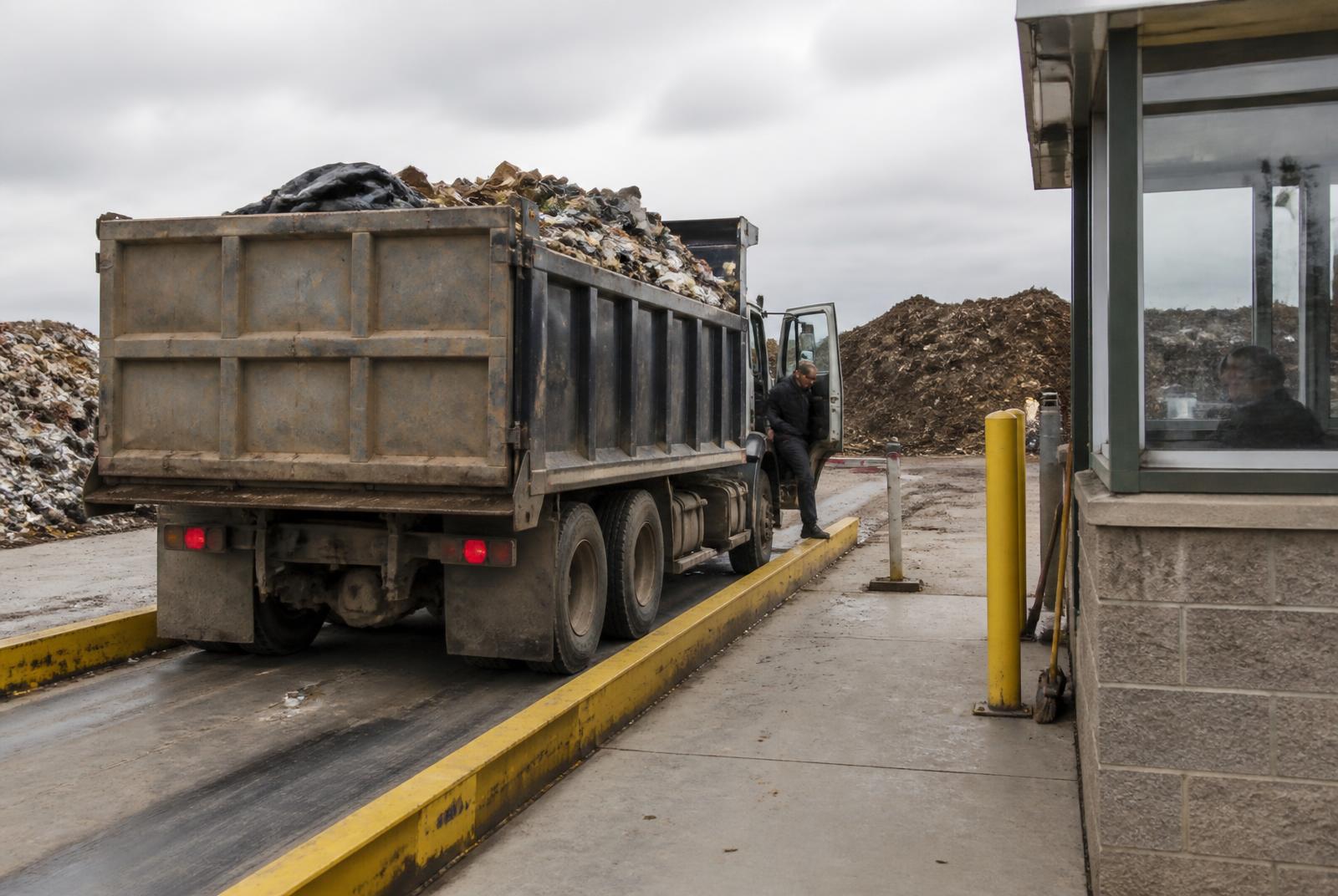
Disposal is usually the second-largest cost in a junk removal business and the only one that changes on every single job. Two loads that look identical in the truck can differ by $150 at the scale house. Operators who track cost per ton and cost per load know instantly which jobs make money; operators who do not are guessing every time they quote.
This guide covers how disposal is actually billed, what different materials cost you, how to route loads so you pay less, and the recycling streams that turn a cost line into a credit.
How facilities bill you
| Charge | How it works | What it means for you |
|---|---|---|
| Tipping fee per ton | You weigh in loaded, weigh out empty, pay for the difference | This is your main variable cost – the number to know cold for every facility you use |
| Minimum charge | A floor, often equal to 1 ton, whatever you actually dump | Half-empty trips are pure waste – batch jobs before you dump |
| Per-item surcharges | Flat fees on mattresses, tires, appliances with refrigerant, electronics | These must be priced into the job, not absorbed |
| Contamination or sorting fees | Charged when a clean stream has trash mixed in, or hazardous items are found | One paint can in a load can wipe out the job margin |
| Account vs cash rates | Commercial accounts often get lower per-ton pricing and monthly billing | Ask for an account as soon as you are dumping weekly |
Tipping fees vary enormously by region – roughly $30–$70 per ton across much of the South and Midwest, and $80–$150+ per ton in the Northeast and on the West Coast where landfill capacity is tight. Call the three closest facilities and write their per-ton rate, minimum, hours and surcharge list on a card in the truck. That card is worth more than any software.
What different materials really cost you
Weight per cubic yard is the number that predicts your scale ticket. This is why a garage full of foam and cardboard is a great job and a bathroom demo is a trap.
| Material | Rough weight per cubic yard | Cost impact |
|---|---|---|
| Cardboard, foam, plastic toys, clothing | 50–150 lbs | Cheap to dump, fills the truck fast – your most profitable volume |
| Mixed household junk and furniture | 150–300 lbs | Predictable; this is what your standard rate card assumes |
| Wood, drywall, remodel debris | 300–500 lbs | Watch the ticket; separate clean wood where the facility rewards it |
| Roofing shingles | Roughly 2,500–3,000 lbs (over a ton per yard) | A few yards is a full legal load – quote by the ton, always |
| Dirt, sod, concrete, brick, tile | 2,000–3,000+ lbs | Never quote by volume; many facilities price inert debris separately, sometimes cheaper if it is clean |
| Appliances and scrap metal | Varies | Often a credit at a scrap yard instead of a cost at the landfill |
The practical rule: any load where the material is dense enough to hit your legal payload before the bed is full has to be priced by weight. Overloading is not a clever workaround – it costs you tickets, brakes and tires, and it is the fastest way to lose a truck for a week.
Where each stream should go
| Stream | Destination | Economics |
|---|---|---|
| Ferrous and non-ferrous metal, appliances | Scrap yard | Paid by weight; non-ferrous like copper and aluminum is worth far more than steel |
| Clean concrete, brick, asphalt | Inert or C&D recycler | Usually cheaper per ton than the landfill if it is clean and separated |
| Clean wood and yard debris | Wood or compost facility | Lower per-ton rate than mixed waste in most markets |
| Usable furniture and household goods | Reuse or donation center | Zero dump cost and a donation receipt you can hand the customer |
| Electronics | E-waste recycler | Free to modestly priced; CRTs and monitors usually carry a fee |
| Mattresses | Mattress recycler or landfill with surcharge | Free at participating sites in states with a recycling program; a per-unit fee elsewhere |
| Refrigerators and AC units | Certified refrigerant recovery | Refrigerant must be recovered by a certified tech before scrapping; budget the fee |
| Paint, oil, chemicals, propane, tires | Household hazardous waste or specialty program | Do not put these on the truck as part of a standard quote – see what companies can and cannot take |
Sorting takes time, so only split a stream when the savings beat your labor. A rough test: if separating a stream saves less than 20 minutes of crew cost, throw it in the mixed load and move on.
Five ways to cut disposal cost this month
- Stop dumping half-empty. If the facility has a one-ton minimum, dumping a 900 lb load pays for capacity you did not use. Route two or three jobs before the scale house whenever the schedule allows.
- Pull the metal first. Appliances, bed frames, shelving and pipe come out of the load before you weigh in. You avoid the tonnage and get paid for the scrap.
- Open a commercial account. Weekly volume usually earns a lower per-ton rate and monthly billing, which also cleans up your bookkeeping.
- Compare facilities including drive time. A site $15/ton cheaper 25 minutes farther away is not cheaper – add crew and truck cost for the round trip before you switch.
- Price the surcharges into the quote. Mattresses, tires, TVs and fridges get a line item. Absorbing them silently is the most common margin leak in the business.
Track two numbers, forever
Keep every scale ticket and log two figures per job: disposal cost per load and disposal as a percentage of the invoice. On healthy residential work, disposal typically lands around 15–25 percent of revenue. When a job type consistently comes in above 30 percent, either the price is too low or the material belongs on per-ton pricing – both are fixable, and the fix is in our guide to pricing a junk removal job.
Frequently asked questions
How much does it cost to dump a full truck of junk?
For a typical residential load of 2–3 tons, expect roughly $100–$400 depending on your region per-ton rate, plus per-item surcharges. The same truck full of shingles or tile can cost considerably more because it weighs far more.
Is a transfer station cheaper than a landfill?
Often yes for a small operator, because transfer stations are usually closer, faster to get in and out of, and priced competitively for small loads. The landfill can win on per-ton price but cost you an hour of cycle time. Compare total cost, not the gate rate.
Can I make money on scrap metal?
Yes, though prices move with commodity markets. Steel appliances bring modest money by weight, while copper, brass and aluminum are worth substantially more. Most operators treat scrap as a fuel-and-lunch offset that also avoids tipping fees, not as a revenue line.
What happens if hazardous material is found in my load?
The facility can refuse the load, charge a contamination or handling fee, and in some cases require you to remove and properly dispose of the item yourself. Screen for paint, oil, chemicals, propane and batteries at the job, not at the gate.
Should I pass dump fees through to the customer separately?
For residential work, quote all-in – customers strongly prefer one number and hidden fees generate disputes and bad reviews. For contractor and commercial accounts, disposal at cost plus a stated markup is normal and often expected.