
Why Junk Removal Costs More in 2026 - and Where Your Money Actually Goes
By Jim Stogiannos · October 5, 2026
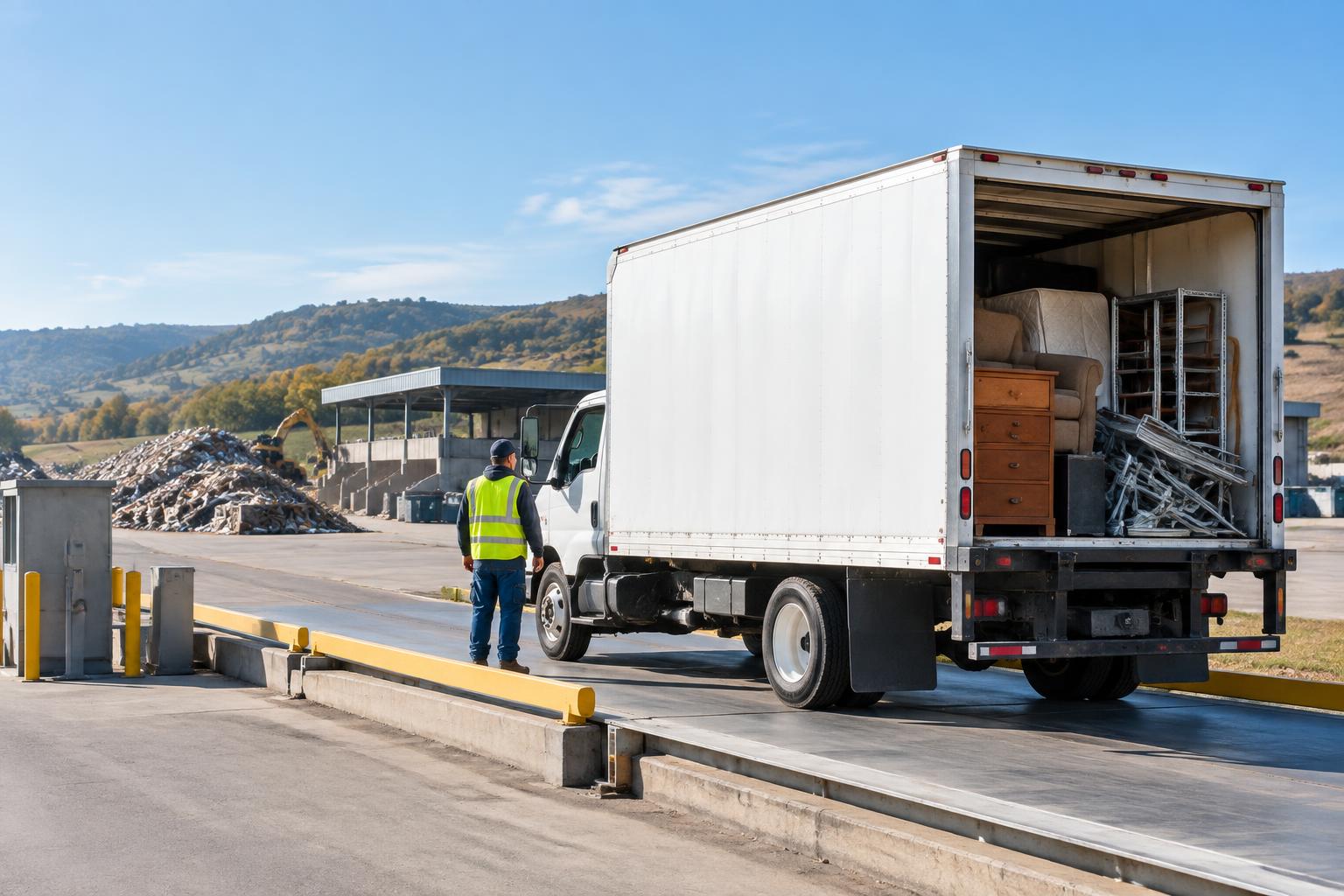
The quote went up. Your pile may look the same, but the cost of getting it to its final destination did not. In many markets, the increase starts upstream of the local hauler: at the landfill, transfer station and sorting facility that charges the company after your items leave the driveway.
That does not mean every high quote is automatically fair. It means a useful comparison has to look beyond truck space. A professional hauler is selling crew time, equipment, transportation, sorting and legal disposal as one service. When the gate price rises, the customer eventually feels part of it.
If you are asking why is junk removal so expensive, the 2026 disposal numbers explain a meaningful part of the answer. They also show why two honest companies in different cities can quote the same-looking job differently.
What a hauler actually pays at the gate
A truck does not simply arrive at a landfill and empty without a bill. At many facilities, it is weighed on the way in and again on the way out. The difference becomes the billable tonnage. Transfer stations receive waste closer to where it is collected, then move it onward; that convenience can carry a higher gate rate.
The July 2026 Waste Price and Volume Index from Waste Business Journal, as reported by BioCycle, put the national weighted-average landfill tipping fee at $72.14 per ton, up 2.5% year over year. The averages vary substantially by region:
| Market | July 2026 gate price | What changed |
|---|---|---|
| National landfill average | $72.14 per ton | Up 2.5% year over year |
| Northeast | $99.19 per ton | Highest regional average; volume down 4.2% as waste moved out of the region |
| Midwest | $83.63 per ton | Up 1.3% while absorbing Northeast overflow |
| Pacific | $80.29 per ton | Steepest regional increase, up 8.2% |
| California | $80.68 per ton | Up 8.4% |
| Transfer stations | $83.24 per ton | About 15% above the landfill average; volume up 4.7% |
Washington recorded an even sharper 16.6% increase. In the Southeast, the story is scale as well as price pressure: it is the largest disposal region at about 325,000 tons per day and the fastest growing at 5.7%. Florida alone handles more than 53,000 tons per day.
“Capacity constraints in the Northeast are leading to even more waste exported to the Midwest and Southeast,” said Jim Thompson Jr., president of Waste Business Journal. “Consequently, pricing is increasing there in response to increased demand.”
Your local hauler cannot control that system. The company can only choose among the legal facilities within a workable driving distance.
For a deeper operator-focused explanation of scale tickets and material routing, see our guide to junk removal dump fees and disposal costs.
A one-ton truckload example
Consider a simple example: a mixed household load weighs exactly one ton when the truck reaches the gate. This is an illustration, not a claim that every truckload weighs one ton. The disposal-only bill would be:
- $72.14 at the national weighted-average landfill rate.
- $99.19 at the Northeast regional average.
- $83.63 at the Midwest regional average.
- $80.29 at the Pacific regional average.
- $83.24 at the average transfer-station rate.
That money is gone before the hauler pays the crew, buys fuel, maintains the truck or trailer, carries insurance, spends time driving, sorts recoverable material or handles the business side of the job. The gate charge is not the whole quote; it is one unavoidable cost inside it.
The comparison also shows why geography matters. The exact same one-ton load costs more to dispose of at the Northeast average than at the national landfill average. That difference starts with the reported gate rates, not a surcharge added by the hauler, and it repeats across multiple loads.
For the customer-facing price bands by truck space, start with our 2026 junk removal cost guide. It gives you a sound baseline, while the gate-rate math here explains one reason a local quote can land above or below a national range.
Why weight can matter more than volume
Most homeowners see volume first: half a truck, a full truck, a few bulky pieces. The disposal facility sees weight. Those two views line up reasonably well for ordinary household clutter, but they separate fast when dense material enters the load.
Appliances, tile, dirt, concrete and roofing shingles can add substantial weight without filling the bed to the top. A truck that looks half-full may therefore generate a larger scale ticket than a full-looking load of lighter furniture and household items. The heavy load can also require different routing or sorting because not every facility accepts every material in the same stream.
This is why a responsible hauler asks what the material is, not only how much space it appears to occupy. It is also why sending clear photos matters. A photo of a pile can show volume, but a description tells the company whether those boxes contain clothing or broken tile.
If truck fractions are hard to picture, use the cubic yard visualizer before requesting estimates. Then tell each company about dense items separately. Volume helps describe the job; weight and material class help explain the disposal risk.
The four things that genuinely move a quote
- Weight. The heavier the accepted material, the higher the potential scale-house bill. Dense debris may reach a truck's safe carrying limit before the available space is used.
- Access and stairs. A curbside pile is different from the same pile carried down narrow stairs, through a long hallway or out of a backyard with no vehicle access. The second job ties up the crew and equipment longer.
- Sorting and disposal class. Mixed household material, metal, appliances, electronics and construction debris may need different destinations. Items that cannot enter a standard load must be separated before the truck reaches the facility. Review what junk removal companies can and cannot take before the appointment so there are no surprises.
- Scheduling. A flexible pickup can fit an efficient route. A narrow arrival window, urgent same-day request or job that forces a separate disposal run gives the company less room to combine travel and crew time efficiently.
Haulers should be able to explain these factors without hiding behind a vague line item. Customers should also expect the final on-site quote to change when the actual pile, access or material differs from the photos and description used for the estimate.
For operators, our guide to how to price a junk removal job shows how to account for the real work instead of guessing from truck space alone.
How to lower the bill honestly
The goal is not to disguise a heavy load or push disposal work onto the crew after the price is agreed. The best savings come from making the job easier to assess, load and route.
- Pull out metal and recyclable material. Keep obvious metal and other accepted recyclables separate so the hauler can quickly decide whether a different destination makes sense. Ask first; local acceptance rules vary.
- Consolidate into one trip. If more material will be ready shortly, ask whether one larger pickup is more efficient than separate visits. Do not add items after agreeing on the pile; show everything during the estimate.
- Stay flexible on timing. Give the company a wider pickup window when you can. That may let the crew place your job into an existing route instead of creating a separate run.
- Clear the access path. Unlock gates, move vehicles, secure pets and make a safe path to the items. Do not drag material into an unsafe stack; simply remove avoidable obstacles that slow the carry.
Accurate information is the strongest bargaining tool. Send photos from more than one angle, list dense materials, identify stairs and say whether the crew can park close to the pile. A company can quote with more confidence when it is not pricing unknown risk.
How to compare quotes properly
Compare the same scope. Ask whether labor, hauling and disposal are included; whether the price covers every item shown; and what could legitimately change the total on arrival. Confirm that the company is insured and that it uses lawful disposal channels. A low number that excludes the difficult part of the job is not a better quote.
Then look at communication. A good hauler should be willing to explain whether your job is being priced mainly by volume, weight, access or a special material stream. The explanation does not need to reveal the company's margin. It should make the scope understandable enough that you can compare it with another estimate.
The 2026 numbers do not excuse careless pricing. They do show that landfill capacity, transfer-station costs and regional waste flows reach all the way back to a homeowner's driveway. When the quote rises, part of the reason may sit miles away at the gate.
Frequently asked questions
Why is junk removal so expensive?
A junk removal quote covers much more than space in a truck. The company must pay to load, transport, sort and legally dispose of the material, while also covering crew time, fuel, insurance and equipment. Disposal prices rose again in 2026, so part of the increase often starts at the landfill or transfer station rather than with the hauler.
Why do prices vary so much by city?
Local disposal costs and waste routes differ sharply. In July 2026, the Northeast averaged $99.19 per ton while the national weighted average was $72.14. Access, travel time, local sorting rules and the facility a company must use can also change the quote from one city to another.
Why does weight matter more than space?
Disposal facilities commonly charge by weight. Dense materials such as tile, dirt, concrete and shingles can create a high scale ticket before the truck is full, while lighter household items may fill more space without creating the same disposal charge. That is why a half-full heavy load can cost more than a full-looking light load.
Did junk removal prices actually go up in 2026?
The disposal cost behind many junk removal quotes did. The national weighted-average landfill tipping fee reached $72.14 per ton in July 2026, up 2.5% year over year. The Pacific region rose 8.2% to $80.29 per ton, with Washington up 16.6% and California up 8.4% to $80.68 per ton.
Ready to compare the same scope with more than one provider? Find local junk removal companies and show each one the same photos, material list and access details.